
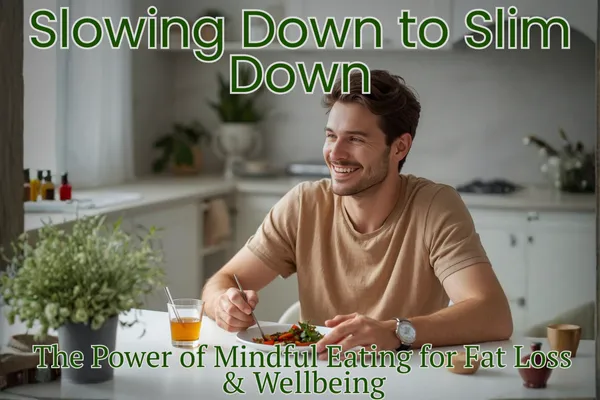
Slowing Down To Slim Down: The Power Of Mindful Eating
Slowing Down to Slim Down: The Power of Mindful Eating
Introduction
Have you ever finished a meal and thought, “Did I even taste that?” If so, you’re not alone.
We live in a world that rewards speed - fast work, fast replies, fast food. Meals are often squeezed in between meetings, emails, school runs, and endless to‑do lists. But here’s something most people don’t realise:
Slowing down when you eat can be one of the most effective tools for better health, more energy, and sustainable fat loss.
I’ve noticed this across all areas of life. Whether I’m training hard in the gym, deep in work, or playing with my kids, everything improves when I’m fully present. Eating is no different. When I slow down and actually pay attention to my food, I enjoy it more and I naturally eat less. No willpower required.

What Is Mindful Eating?
Mindful eating is simply the practice of being fully present while you eat.
That means:
Noticing the colours, smells, textures, and flavours of your food
Paying attention to hunger and fullness cues
Eating without scrolling, working, or watching TV
In short: eating with intention instead of on autopilot.
Now, I know what some of you are thinking.
“Tom, I just want to lose weight, I’m not trying to meditate over my dinner.”
Fair enough. But mindful eating isn’t some fluffy, new‑age trend. It’s a practical, evidence‑based tool that helps people rebuild trust with their appetite and stop overeating without restriction.

The Science Behind Mindful Eating
When we eat while distracted by phones, TV, emails, we override our body’s natural hunger and fullness signals.
Research shows that mindless eating often leads to:
Eating past fullness
Reduced satisfaction from meals
Increased snacking later in the day
On the other hand, slowing down helps the brain register satiety. This leads to eating just enough not too much, not too little.
Mindful eating has also been shown to:
Improve digestion
Reduce stress
Support blood sugar control
Lower the risk of heart disease
A Real Client Example
One of my clients, Dan, constantly felt hungry after meals even when his calories were spot on.
Instead of cutting food, we focused on how he ate.
Within a week of practising mindful eating:
His snacking dropped
His hunger stabilised
He felt back in control around food
No diet overhaul. Just awareness.

The Mental Health Benefits
Mindful eating doesn’t just help your body, it helps your head.
In a world that never slows down, eating mindfully becomes a small act of self‑care. For a few minutes, you step off the hamster wheel.
Studies show mindfulness practices can:
Reduce anxiety
Improve mood
Lower stress levels
And let’s not forget something important:
Food is meant to be enjoyed.
When you slow down, flavours improve, satisfaction increases, and meals become something you look forward to, not something you rush through or feel guilty about.

5 Practical Ways to Eat More Mindfully (Even If You’re Busy)
You don’t need more time, just better intention.
Here are five simple strategies you can start today:
Put your cutlery down between bites
This naturally slows your pace and increases awareness.Make meals screen‑free
No phone, no emails, no TV.. just food.Use your non‑dominant hand
It sounds odd, but it works brilliantly for slowing things down.Pause before your first bite
Take a breath. Notice the smell, colour, and effort behind the meal.Sit down to eat
Avoid eating on the go whenever possible, posture and environment matter.
Remember: mindful eating isn’t about perfection. One mindful meal a day is a great start.

Final Thoughts
Mindful eating isn’t a diet. It’s a skill.
It helps you:
Feel more satisfied
Regain control around food
Support fat loss naturally
Improve your relationship with eating
In a culture that rushes everything, slowing down at meals is a powerful form of self‑respect.
So next time you eat, take a breath. Put your phone away. Taste your food.
As Ferris Bueller famously said:
“Life moves pretty fast. If you don’t stop and look around once in a while, you could miss it.”
Don’t let your meals be one of those missed moments.
CTA (Optional):
If you want help building habits like this into your routine — without dieting or overwhelm — reach out and let’s talk.